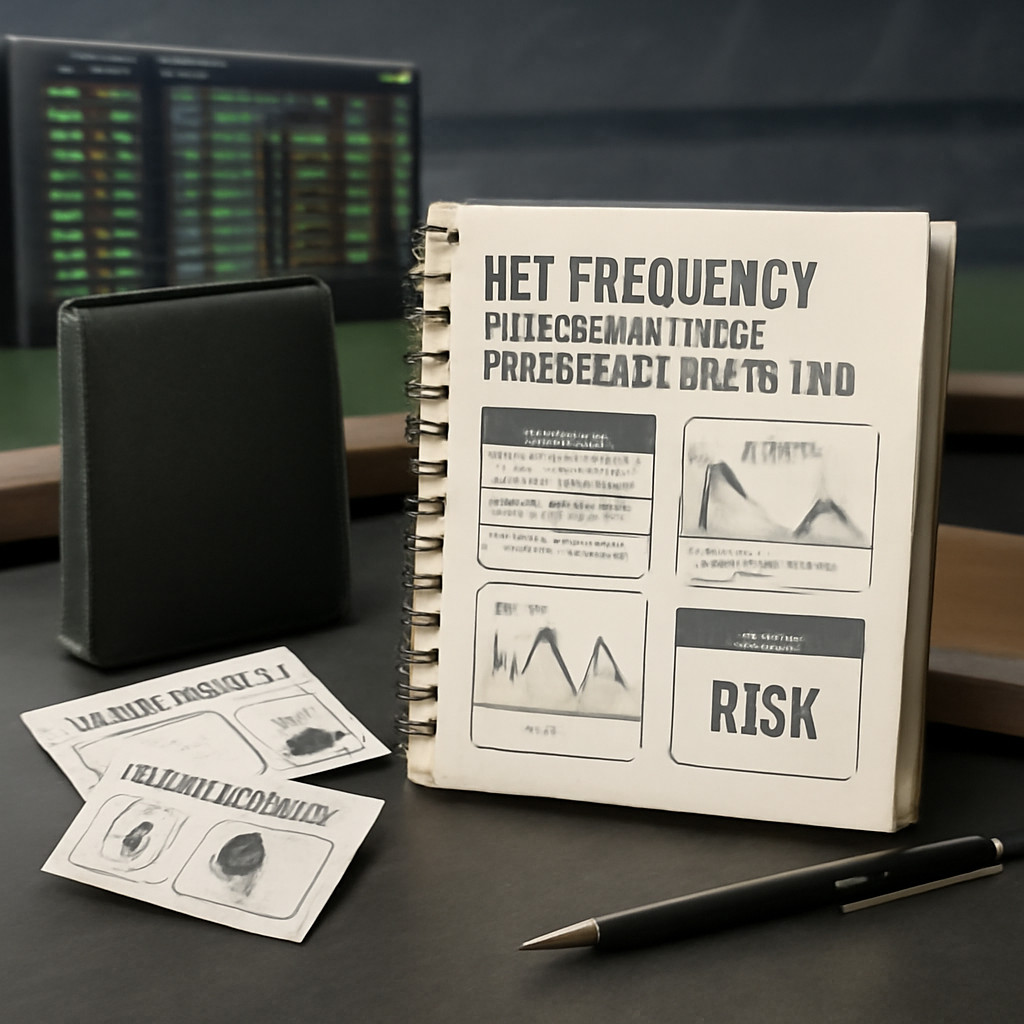
18+ only. Hit frequency is the share of spins or hands that return any win, and it is one of the quickest ways to understand why a game can feel busy, quiet, or streaky. On Luxor Gambling, the useful answer is simple: look at hit frequency together with RTP, house edge, volatility, game rules, and your own session limit, because none of those numbers turns casino play into a guaranteed outcome. Casino games have negative expectation, and this page is for education, not strategy promises.
If you came here because you saw the phrase on a slot page, the practical reading is this: a higher hit frequency usually means more frequent small returns, while a lower hit frequency often means longer dry spells with larger occasional hits. That does not change the underlying math. It only changes how the session may feel. If you want the broader framework behind that, start with the Casino Math Hub and the RTP And Volatility Calculator, then come back to this page for the narrower hit-frequency lens.
What hit frequency means in plain language
Hit frequency is the percentage of plays that produce a win of some kind. In slot language, that can include a small line win, a feature trigger, or another defined payout event depending on the game rules. In table games, the idea is similar but the wording changes because the game structure is different. The important point is that hit frequency is about how often a result appears, not how large the result is.
That distinction matters because many readers assume a game with frequent wins is automatically better. It is not. Frequent wins can still come with small payouts and a negative long-run expectation. A game with a lower hit frequency can still have the same RTP as a more active-feeling game. The difference is in variance, not in magic.
For a supporting page that already earns search demand on this topic, see Slot hit frequency explained: rules, volatility and limits. This article is narrower: it focuses on what the number means for session risk, how to read it with RTP, and how to avoid overreading a streak.
Hit frequency, RTP and volatility are not the same thing
Readers often treat these three terms as if they were interchangeable. They are not. RTP describes the long-run theoretical return. Volatility describes how uneven the results may be along the way. Hit frequency describes how often a win event appears. A game can have a moderate RTP, a high hit frequency, and still be very volatile if the wins are mostly small and the occasional larger payout is rare.
That is why a game can feel “generous” without actually being generous in expectation. The feel of the session is not the same as the math of the game. On Luxor Gambling, the calculation-first approach is to separate those layers before you decide whether a game fits your budget and attention span. If you want a direct comparison of return and edge, use the RTP And Volatility Index after this article.
| Game concept | Plain meaning | Limit reminder |
|---|---|---|
| Hit frequency | How often a spin or hand returns any win event | Frequent wins can still be small and still lose over time |
| RTP | Theoretical long-run return percentage | Not a promise for one session |
| Volatility | How uneven the results may feel | High volatility can create long dry spells |
| House edge | The casino’s built-in long-run advantage | Lower edge does not remove risk |
Why hit frequency can mislead session expectations
A common mistake is to see several small wins early and assume the game is “hot.” Another is to see a stretch of misses and assume the game is due. Both ideas are risky because they turn a short run into a story that the math does not support. Hit frequency is measured over many plays, not over a few minutes of emotional memory.
Suppose two slot games both have similar RTP, but one hits often with small returns and the other hits less often with larger returns. The first may feel smoother because the screen keeps paying something. The second may feel harsher because the balance can drop for longer before a result lands. Neither feeling changes the fact that the long-run expectation remains negative. The difference is how the variance is delivered.
That is also why bonus copy can be distracting. A flashy offer can make a game look more favorable than it is, especially if the wagering requirements, max bet rules, or game restrictions are buried. For a terms-first route, use the Responsible Play page and the Methodology page before you accept any promotional framing.
How to read hit frequency before you play
Use a short checklist before you start a session. First, confirm whether the game even publishes hit frequency or whether the number is inferred from provider data or testing notes. Second, check the RTP and the volatility profile together. Third, read the rules so you know what counts as a hit. Fourth, decide your stop point before the first spin or hand. That last step matters more than the number itself, because budget control is the only part of the session you can actually control.
On the mobile screen, keep the process simple. A quick check is better than a long research ritual. If the game’s rules are unclear, or if the hit-frequency figure is presented without context, treat it as a signal to slow down, not as a reason to play more. The number is a description, not a recommendation.
For a practical tool route, the RTP And Volatility Calculator can help you compare games in a more structured way. If you prefer a broader reference page, the Casino Math Hub collects the main math concepts in one place.
Worked example: the same RTP can feel very different
Imagine two slot games, both with the same theoretical RTP. Game A has a higher hit frequency and smaller average wins. Game B has a lower hit frequency and larger average wins when they land. Over a long enough sample, both still sit inside the same negative-expectation framework. But during a single evening, Game A may feel more active while Game B may feel more volatile and more punishing between hits.
That is the key lesson. Hit frequency changes the texture of the session, not the direction of the math. A player who likes frequent feedback may prefer the first feel, while another player may accept the second feel in exchange for a different style of variance. Neither choice removes risk. Neither choice creates a profit path.
If you see a branded slot name like Luxor Fortunes or Luxor Fourtunes in search results, read the math the same way you would for any other game. The spelling variation does not change the mechanics. What matters is the published RTP, the volatility, the rules, and whether the game’s hit pattern fits the budget you already set.
What to watch for in game rules and bonus terms
Hit frequency can be distorted by how a game is described. Some pages count any feature as a hit. Others count only a base-game payout. Some exclude bonus-trigger events from the published figure. That is why the rule set matters. If you do not know what the publisher counts, you may compare two games as if they used the same definition when they do not.
Bonus terms can create a similar problem. A promotion may advertise more playtime or more spins, but the wagering requirement, maximum bet cap, game weighting, and expiry window can make the offer much less flexible than it first appears. That is why Luxor Gambling keeps the terms and the math together. If the promotional layer is the only thing you notice, you are not reading the product carefully enough.
For a country and compliance-aware source check, use the visible references below. They are there so you can verify the basic framework, not so you can chase a better outcome. This article is educational content only, and commercial links are sponsored.
Quick comparison before you decide to play
| Question | What to check | Why it matters |
|---|---|---|
| Does the game publish hit frequency? | Look for a clear provider note or testing source | Prevents guessing from marketing copy |
| Is the RTP visible? | Check the exact version of the game | Different versions can have different returns |
| Is volatility explained? | Read whether the game is low, medium, or high variance | Helps set expectations for streaks |
| Do the rules define a hit? | See what counts as a win event | Hit frequency is only useful if the definition is clear |
| Is your budget fixed? | Set a stop point before play | Protects against chasing losses or time drift |
Where this page fits in the Luxor Gambling cluster
This article is a supporting explainer, not a pillar page. It answers the narrow query first, then routes you to the broader math framework. If you want the cluster view, start with the Volatility And Variance category, then move to the RTP And House Edge category for the return and edge side of the story. For rules-heavy reading, the Game Rules And Odds category is the better next stop.
For readers who want a concise route rather than a cluster map, these internal pages are the most useful next steps: Casino Math Hub, RTP And Volatility Calculator, RTP And Volatility Index, Responsible Play, and Methodology. Those pages keep the math, limits and source frame visible before any commercial decision.
Sources to verify
- UK Gambling Commission: gaming machine RTP: return-to-player disclosure context
- American Gaming Association: responsible play: responsible-play baseline
- Luxor Gambling methodology: RTP, house edge and variance method
Network methodology reference
For methodology notes, data limits and verification checklists around hit frequency, use iGaming Data Labs Reference Hub. That reference link is not a partner route and does not replace this site’s local internal links.
FAQ
Can hit frequency tell me whether a slot is better?
No. It can tell you how often the game tends to return any win event, but it cannot tell you whether the game is better in a profit sense. You still need RTP, volatility and rules context, and even then the game remains negative expectation.
Does a higher hit frequency mean lower risk?
Not necessarily. A higher hit frequency can mean more frequent small wins, but the game can still have a house edge and still produce losses over time. Risk depends on the full math profile and on your own budget control.
Why do some games feel streakier than others?
Because volatility shapes the spacing of results. A game with lower hit frequency may leave longer gaps between wins, which can feel streaky even when the underlying math is working as designed.
Should I trust a bonus just because the game hits often?
No. Bonus value depends on the terms, not just on the game feel. Check wagering requirements, max bet rules, expiry and game restrictions before you treat the offer as useful.
Is there a safe way to use hit frequency information?
Yes. Use it as one input for expectation setting, not as a signal to increase stakes. Keep a fixed entertainment budget, set a stop point, and treat the number as descriptive rather than predictive.
Reminder: 18+ only. Educational content only. Casino games have negative expectation. No article guarantees outcomes. Sponsored casino references are advertising and must not override RTP and risk context.
Related checks on this site
These routes connect this answer with closer checks, methodology and fresh local coverage.